



Navigating the Nexus: An Expert’s 2026 Outlook on Global Commercial Real Estate Dynamics
From my vantage point, having navigated the intricate currents of the global commercial real estate landscape for over a decade, it’s clear that 2026 isn’t merely another year on the calendar—it marks a critical inflection point. We are operating within an economic mosaic where global forces such as interest rate trajectories, inflationary pressures, and geopolitical shifts profoundly influence regional and local market conditions. The overarching narrative for global commercial real estate remains one of paradox: interconnected yet fragmented, resilient yet challenged, predictable yet full of surprises.
This isn’t a market for the faint of heart or the undifferentiated. Success in the upcoming cycle hinges on an astute, data-led understanding of these complex dynamics, coupled with a nuanced appreciation for local execution. My aim here is to cut through the noise, offering an expert-level analysis of where global commercial real estate stands, what’s driving it, and where the most compelling opportunities and significant risks lie as we move deeper into the mid-2020s. We’ll delve into the ebbs and flows of capital, dissect the performance of key asset classes—from the stalwart industrial sector to the evolving office and retail landscapes—and explore the burgeoning specialized segments like data centers, all while integrating forward-looking insights and 2025 trends to prepare you for what’s next.
Global Capital and Investment Activity: A Shifting Tectonic Plate
The flow of capital into global commercial real estate entering 2026 continues to be characterized by strategic recalibration rather than unfettered enthusiasm. In my experience, investor sentiment is increasingly discerning, favoring clarity over conjecture and proven resilience over speculative growth. We’re witnessing a more selective deployment of capital, a notable shift from the broader-brush strategies of previous cycles.
Recent surveys across major investment hubs—North America, Europe, and Asia-Pacific—consistently underscore that direct investments and separate accounts remain foundational to real estate investment strategies. However, the nuances lie in the “how” and “where.” Fundraising activity is more challenging, demanding compelling narratives around risk-adjusted returns and a clear path to value creation. Transaction volumes reflect this caution, varying significantly by region, influenced by local economic stability, regulatory environments, and asset pricing. In the Asia-Pacific region, for example, institutional real estate investment in India saw a robust increase in 2025, reaching approximately USD 8.5 billion—a nearly 29% year-over-year jump. This surge highlights specific market catalysts, such as rapid urbanization and infrastructure development, attracting considerable private equity real estate funds.
High-CPC keywords like “commercial property valuation” and “investment-grade properties” are top of mind for capital allocators. There’s an acute focus on transparent CRE valuation services to ensure capital is placed in assets that offer strong income stability and long-term appreciation potential, mitigating risks associated with distressed commercial assets. Furthermore, the competitive landscape for “commercial mortgage financing” has tightened, placing a premium on sponsors with strong track records and robust balance sheets. For astute investors, this environment also presents unique “opportunity zone investments” and avenues for real estate portfolio optimization, particularly through strategic divestments and acquisitions designed to enhance overall fund performance within the broader global commercial real estate context. Understanding these capital dynamics is paramount to making informed decisions in a global commercial real estate market that rewards strategic foresight.
Sector Activity Across Global Markets: A Granular Perspective
The performance of various global commercial real estate asset classes in 2026 is anything but uniform. Each sector faces its own set of headwinds and tailwinds, requiring a highly granular, data-driven approach to assessment.
Industrial and Logistics: The Unyielding Engine
The industrial and logistics sector continues to be a standout performer within global commercial real estate, serving as the bedrock of modern supply chains, manufacturing, and distribution networks. From my decade of observing market trends, the demand drivers here are structural and enduring. The continued growth of e-commerce, the strategic imperative for supply chain diversification and resilience (often translating into “reshoring” or “nearshoring” manufacturing), and the relentless march of technological innovation in automation all fuel an insatiable appetite for well-located logistics facilities.
What we’re seeing on the ground are intense pressures for last-mile delivery solutions, driving up land values in urban infill locations, particularly in bustling U.S. commercial real estate markets. The proliferation of cold storage facilities, driven by grocery delivery and pharmaceutical needs, represents another high-growth niche. Despite new construction, supply remains constrained in many prime submarkets globally, leading to robust rental growth and compressed capitalization rates. Savvy investors are actively seeking logistics real estate investment opportunities and industrial property management solutions that can adapt to evolving tenant demands, including sophisticated automation integration. The long-term outlook for this segment of global commercial real estate remains exceptionally strong, although rising construction costs and land scarcity present ongoing challenges.
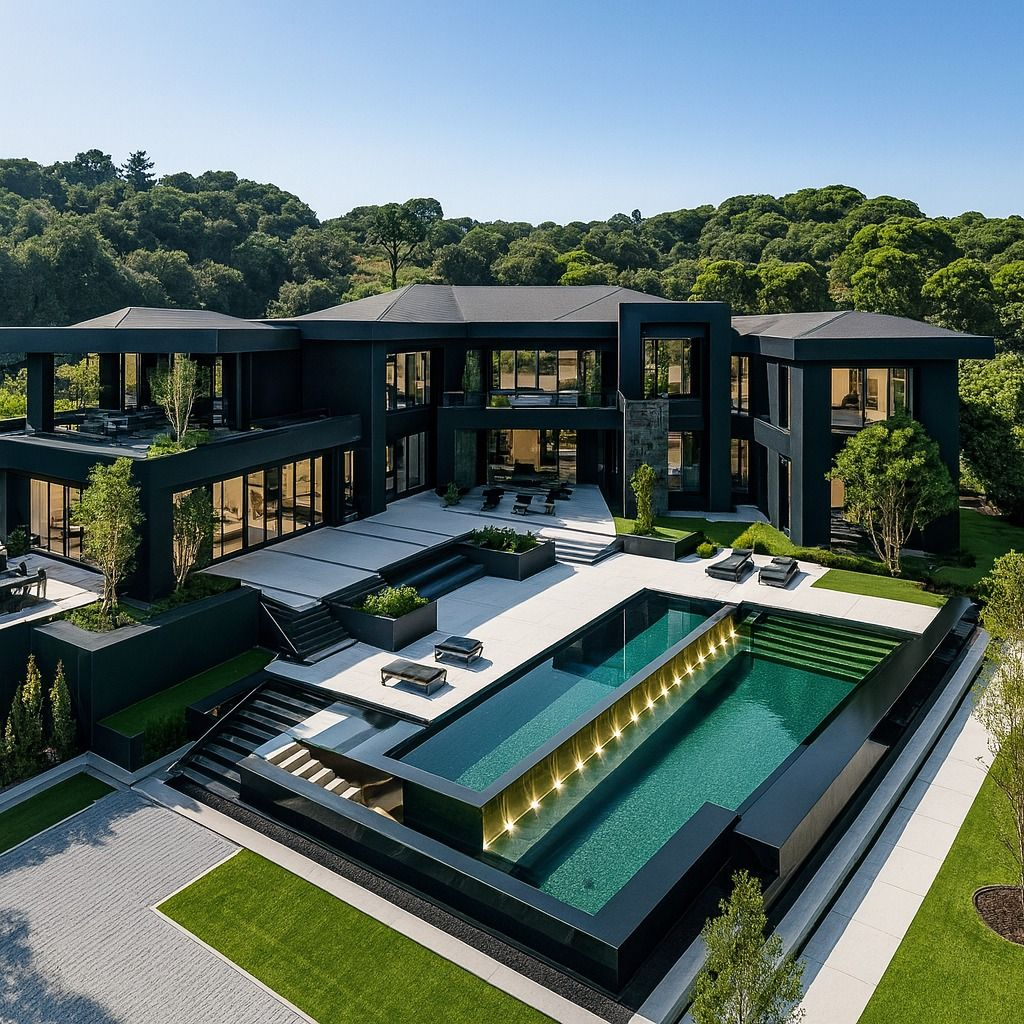
Office: Navigating the Hybrid Horizon
The office sector within global commercial real estate remains arguably the most complex and debated asset class. Entering 2026, market conditions are defined by stark divergences—by city, by building quality, and by regional economic resilience. The seismic shift to hybrid work models has permanently altered space utilization, rendering a significant portion of older, lower-quality stock functionally obsolete.
Global office vacancy rates, particularly in many major metropolitan areas, remain elevated. However, this headline number often obscures a critical “flight to quality.” Newer, highly amenitized, and sustainably designed Class A and Trophy assets in central business districts are consistently outperforming, commanding higher occupancy and stronger leasing activity. These buildings offer an elevated “tenant experience” – a critical differentiator in attracting and retaining talent. Conversely, secondary and tertiary assets, lacking modern infrastructure, amenities, or an ESG story, are struggling with persistent vacancies and declining valuations. This dynamic is particularly evident in the U.S. commercial real estate markets, where overall office vacancy exceeded 18% in 2024, with significant market-level variations. Leasing activity is heavily concentrated in premium spaces, leaving a long tail of older properties fighting for relevance.
In Europe, while strong occupancy is seen in select gateway cities, the supply of high-quality, modern space is severely constrained. This is often due to a combination of stringent planning regulations and higher development financing costs, limiting new development pipelines. Investors are increasingly exploring adaptive reuse projects for underperforming office assets, converting them into residential, lab, or mixed-use spaces. The emphasis on “smart building technology” and “ESG commercial real estate” compliance is not just a trend; it’s a fundamental requirement for attracting capital and tenants. For those seeking to optimize their portfolios, commercial office space solutions must consider these evolving demands, focusing on properties that can foster collaboration, well-being, and flexibility, or strategically divesting from those that cannot. The future of the office in global commercial real estate is less about its demise and more about its radical transformation.
Retail: The Resilient Innovator
The retail global commercial real estate sector, often prematurely written off, has demonstrated remarkable resilience and adaptability. Moving into 2026, its performance is highly location-specific and intrinsically linked to consumer spending patterns, evolving retail formats, and strong tenant curation.
In the U.S. retail market, we’ve observed a positive net absorption trend, with 2025 showing a rebound after earlier declines. This recovery is largely attributed to a constrained supply pipeline, a combination of limited new construction, and the demolition of obsolete older spaces. This tightens the available stock, allowing existing, well-located retail centers to thrive. The “PwC Emerging Trends in Real Estate® 2026” retail outlook corroborated this, noting positive net absorption in 2024, supported by this limited development. Similarly, in Canada, major markets like Vancouver and Toronto are experiencing some of North America’s tightest retail availability rates, underscoring the critical role of tenant mix and local demographics in driving success.
The ongoing narrative within retail property investment is the pivot towards experiential retail, mixed-use developments, and necessity-based shopping centers. E-commerce hasn’t killed brick-and-mortar; it’s forced its evolution. Retailers are integrating online and offline experiences (omni-channel strategies), prioritizing convenience, and investing in unique customer engagement. Neighborhood retail centers, grocery-anchored strips, and strategically located power centers continue to perform well. Conversely, outdated enclosed malls without significant redevelopment or experiential offerings face ongoing challenges. The key takeaway for global commercial real estate investors in retail is the imperative of understanding specific submarket dynamics, consumer behavior, and the ability of a property to offer a compelling value proposition that transcends mere transactions.
Development and Supply Conditions: A Measured Approach
Development levels within global commercial real estate heading into 2026 are generally more subdued compared to previous peak cycles, reflecting a more cautious and selective approach from developers and lenders alike. This isn’t a blanket slowdown, but rather a strategic reallocation of resources.

The primary constraints on new commercial construction activity are multifaceted: elevated financing costs, persistently high construction materials and labor expenses, and increasingly complex local planning and regulatory environments. This has led to highly differentiated development pipelines across regions and asset classes. While overall commercial starts have tempered, select sectors—particularly logistics, specialized industrial facilities, and data centers—continue to see targeted, robust development activity. This is where “real estate development consulting” becomes crucial, helping identify viable projects with strong demand fundamentals. Furthermore, the increasing emphasis on sustainable commercial buildings and ESG criteria is shaping development priorities, favoring projects that offer energy efficiency, reduced carbon footprints, and resilient designs. This shift is not merely compliance; it’s an investment in long-term asset value and marketability within the evolving global commercial real estate paradigm.
Specialized Global Asset Classes: The Digital Frontier
Beyond the traditional sectors, specialized asset classes are becoming increasingly significant components of the global commercial real estate investment landscape. Among these, data centers stand out as a prime example of exponential growth driven by fundamental technological shifts.
Data Centers: Powering the Digital Economy
The expansion of data center real estate is nothing short of phenomenal. Driven by the insatiable demand for cloud computing, artificial intelligence (AI), machine learning, and the burgeoning Internet of Things (IoT), data center capacity is projected to grow by approximately 14% annually between 2026 and 2030 globally. This makes “data center real estate investment” a particularly attractive, albeit specialized, segment of global commercial real estate.
The demand for these digital fortresses is global, with major hubs emerging in key connectivity points and power-rich regions. The challenges, however, are significant: securing massive amounts of reliable power, acquiring substantial land parcels, and ensuring robust fiber optic connectivity. We’re observing a two-pronged growth strategy: hyperscale data centers catering to the largest cloud providers and edge computing facilities positioned closer to end-users to reduce latency. Investors are actively pursuing opportunities in digital infrastructure funds and properties that offer not just space, but also critical infrastructure components, reliable power grids, and strategic geographic positioning. The technological backbone of the future is literally built on global commercial real estate in the form of these indispensable data centers.
Conclusion: A Global Framework, Local Nuances, and the Path Forward
As we chart the course for global commercial real estate in 2026 and beyond, one truth remains immutable: while the economic currents are global, the ultimate outcomes are meticulously local. Successful navigation requires a dual perspective—an understanding of macro trends coupled with granular market intelligence. From my professional experience, relying solely on broad brushstrokes is a recipe for missed opportunities or, worse, significant missteps.
For investors, developers, and occupiers alike, the path forward demands strategic foresight and adaptability. Focus on real estate investment strategies that prioritize income stability, capitalize on structural demand shifts (like those in industrial and data centers), and embrace the transformation of traditional assets (like flight-to-quality in office and experiential retail). ESG principles are no longer optional but integral to long-term value creation. The emphasis on “predictive real estate analytics” and leveraging cutting-edge technology to inform decisions will separate the leaders from the laggards.
The global commercial real estate market is dynamic, complex, and full of both challenges and unparalleled opportunities. It’s an environment where expertise, a deep understanding of market fundamentals, and strategic partnerships are more critical than ever.
Ready to strategically position your portfolio for the evolving global commercial real estate landscape? Don’t navigate these complex waters alone. Connect with us to leverage expert insights and tailor a robust strategy for your specific investment goals in 2026 and beyond.